take over
phrasal verb·3 senses·particle over
Meanings
Assume control of something
Why “over”? Something moves from one person or side to another.
“The new manager takes over next week.”
“Maya took over the meeting when Omar left.”
“Can you take over while I run an errand?”
“She takes over the project on Monday.”
Become more powerful or dominant
“Automation is taking over many jobs.”
“Online orders are taking over the shop's sales.”
“Weeds had taken over the garden by August.”
Briefly do a task that another person has been doing
“I'll take over driving for a bit.”
“Maya took over the front desk after lunch.”
“Leo took over the office presentation when Maya reached the product demo.”
Common mistake
She took over of the company.
She took over the company.
Take over takes the object directly — no of.
Natural collocations
The word partners “take over” most often appears with — learn the phrase, not just the verb.
Don't confuse with
Take over means assume control of something. Take off means remove clothing or accessories.
Test yourself
“The new manager takes over next week.” What does it mean?
Nearby in the meaning map
Sink In connects verbs by particle pattern, contrast pairs, and shared base verbs.
take off
A contrast learners often mix up
Remove clothing or accessories; Leave the ground (aircraft); Become suddenly successful
bring over
Same over pattern: transfer
Carry someone or something to a place near where the speaker is
call over
Same over pattern: transfer
Summon someone to come to where you are
carry over
Same over pattern: transfer
Continue from one period or place into the next
come over
Same over pattern: transfer
Visit someone's house or place; Be felt by someone suddenly; Give a particular impression; Change to support a different side or opinion
give over
Same over pattern: transfer
Cede control to someone else
go over
Same over pattern: transfer
Move from this side to the other; Examine or review something carefully; Be received in a particular way by an audience; Move to visit someone's house; Change to a different side, system or position; Use more time or money than a limit
hand over
Same over pattern: transfer
Give something to someone, especially with formality; Surrender control or power to someone else

Sink In — iOS & Android
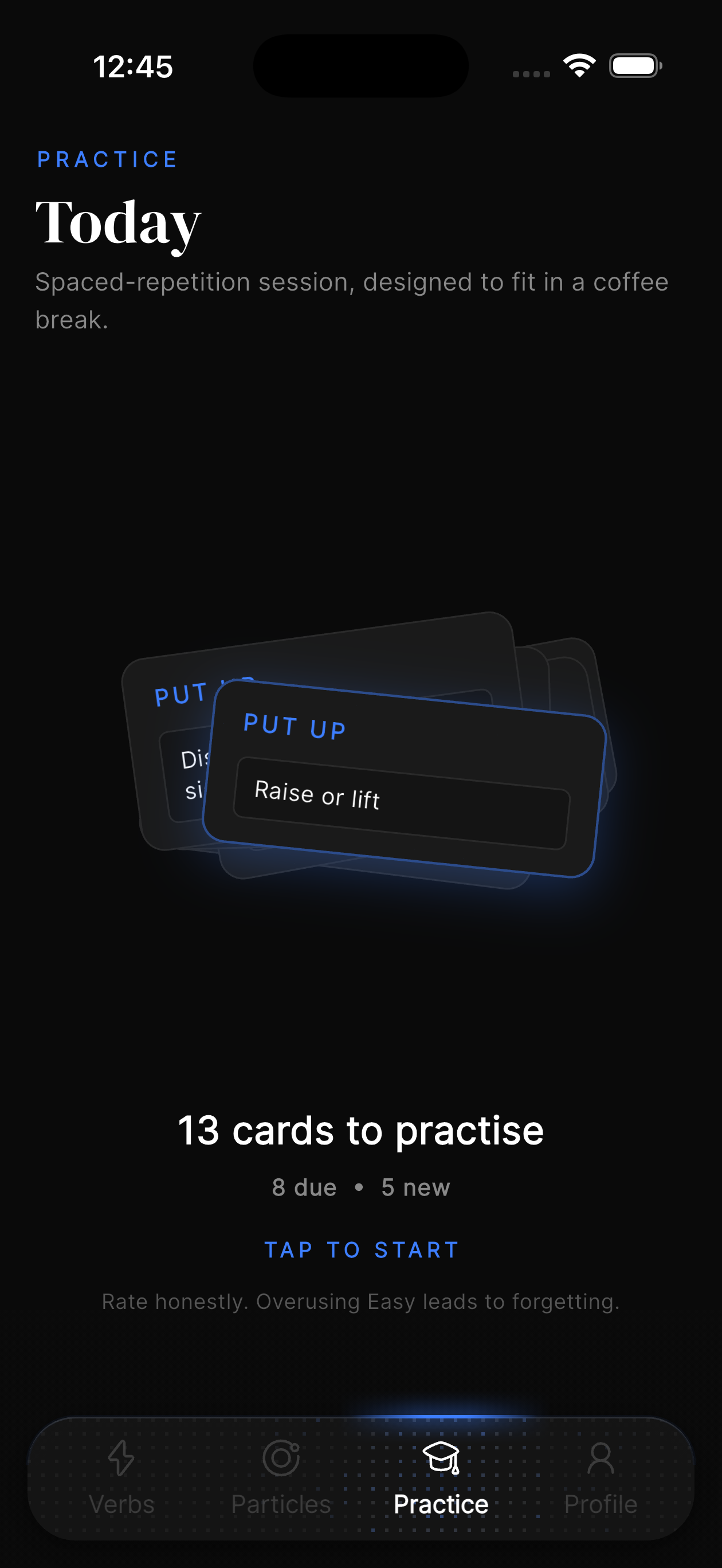
Practice “take over” in Sink In
Drill “take over” and 1,300+ other phrasal verbs with spaced repetition, organised by the particle patterns that connect them.
- Learn the pattern behind dozens of verbs at once — not one-off translations.
- Spaced repetition (SM-2) brings each meaning back right before you forget.
- Four practice modes train recall and discrimination, not just recognition.