come over
phrasal verb·4 senses·particle over
Meanings
Visit someone's house or place
Why “over”? Someone visits, stays for a night, or stops during a longer journey.
“Maya's friend came over for dinner that evening.”
“Come over for tea after class.”
“Maya came over after school.”
Be felt by someone suddenly
Why “over”? Something goes over another thing. It can hide it, protect it, or cover its surface.
“A wave of dizziness came over me.”
“A strange calm came over the room.”
Give a particular impression
“He comes over as confident.”
“The email came over as rude.”
Change to support a different side or opinion
Why “over”? Something moves from one person or side to another.
“He's come over to our side.”
“Maya came over to our way of thinking after the debate.”
“Several MPs came over to the new party.”
Common mistake
Come over at my place tonight.
Come over to my place tonight.
Use to (not at) for the destination after come over.
Natural collocations
The word partners “come over” most often appears with — learn the phrase, not just the verb.
Don't confuse with
Come over means visit someone's house or place. Come off means become detached from something.
Come over means visit someone's house or place. Come around means visit someone at their home.
Come over means visit someone's house or place. Come by means pay a brief visit to someone.
Test yourself
“Maya's friend came over for dinner that evening.” What does it mean?
Nearby in the meaning map
Sink In connects verbs by particle pattern, contrast pairs, and shared base verbs.
come around
A contrast learners often mix up
Visit someone at their home; Regain consciousness after fainting or anaesthesia; Eventually agree to or accept an idea; (of an event) recur on a regular schedule
come by
A contrast learners often mix up
Pay a brief visit to someone; Get or find something, often when it is difficult
come off
A contrast learners often mix up
Become detached from something; Happen successfully as planned; Stop taking a medicine or substance; Give a particular impression to others; Be withdrawn from sale or service
come round
A contrast learners often mix up
Visit someone briefly at their home; Eventually accept a different point of view; Regain consciousness after fainting or anaesthesia
bring over
Same over pattern: transfer
Carry someone or something to a place near where the speaker is
call over
Same over pattern: transfer
Summon someone to come to where you are
carry over
Same over pattern: transfer
Continue from one period or place into the next
cover over
Same over pattern: covering
Place something on top to hide or protect
Tell it apart
Side-by-side comparisons with the verbs learners most often confuse for “come over”.

Sink In — iOS & Android
Practice “come over” in Sink In
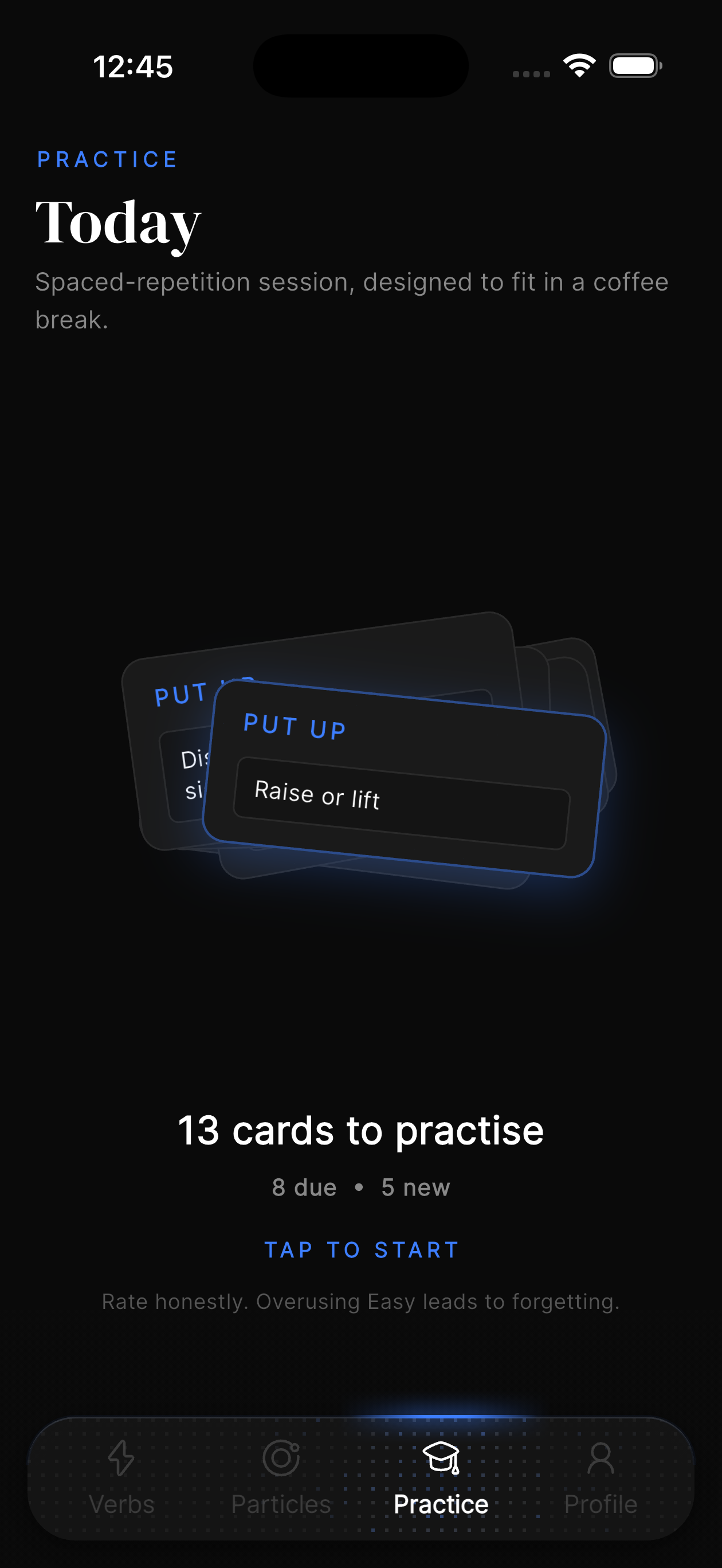
Drill “come over” and 1,300+ other phrasal verbs with spaced repetition, organised by the particle patterns that connect them.
- Learn the pattern behind dozens of verbs at once — not one-off translations.
- Spaced repetition (SM-2) brings each meaning back right before you forget.
- Four practice modes train recall and discrimination, not just recognition.