plan out
phrasal verb·1 sense·particle out
Meanings
Plan something in detail in advance
Why “out”? Something comes into the open. People can see it, know it, or understand it.
“Leo planned out the whole shopping trip while Maya read the list at the shopping centre cafe.”
“Maya and Leo planned out dinner and their trip to the club.”
“We planned out every stage.”
“Maya planned out the next stage of the office project with her team.”
Don't confuse with
Plan out means plan something in detail in advance. Plan ahead means make plans for the future in good time.
Test yourself
“Leo planned out the whole shopping trip while Maya read the list at the shopping centre cafe.” What does it mean?
Nearby in the meaning map
Sink In connects verbs by particle pattern, contrast pairs, and shared base verbs.
plan ahead
A contrast learners often mix up
Make plans for the future in good time
bear out
Same out pattern: becoming clear
Provide evidence that confirms what someone has said
break out
Same out pattern: becoming clear
(of war, fire or disease) Start suddenly; Escape from a locked or guarded place
bring out
Same out pattern: becoming clear
Make a quality or feature more obvious; Publish or launch a new product; Cause a particular response or behaviour in someone; Take something out of a container or place to show it; Encourage a shy person to be more confident
call out
Same out pattern: becoming clear
Shout something loudly or summon services
check out
Same out pattern: becoming clear
Leave a hotel after paying; Look at or examine
come out
Same out pattern: becoming clear
Be revealed publicly
dig out
Same out pattern: becoming clear
Find something by searching through other things

Sink In — iOS & Android
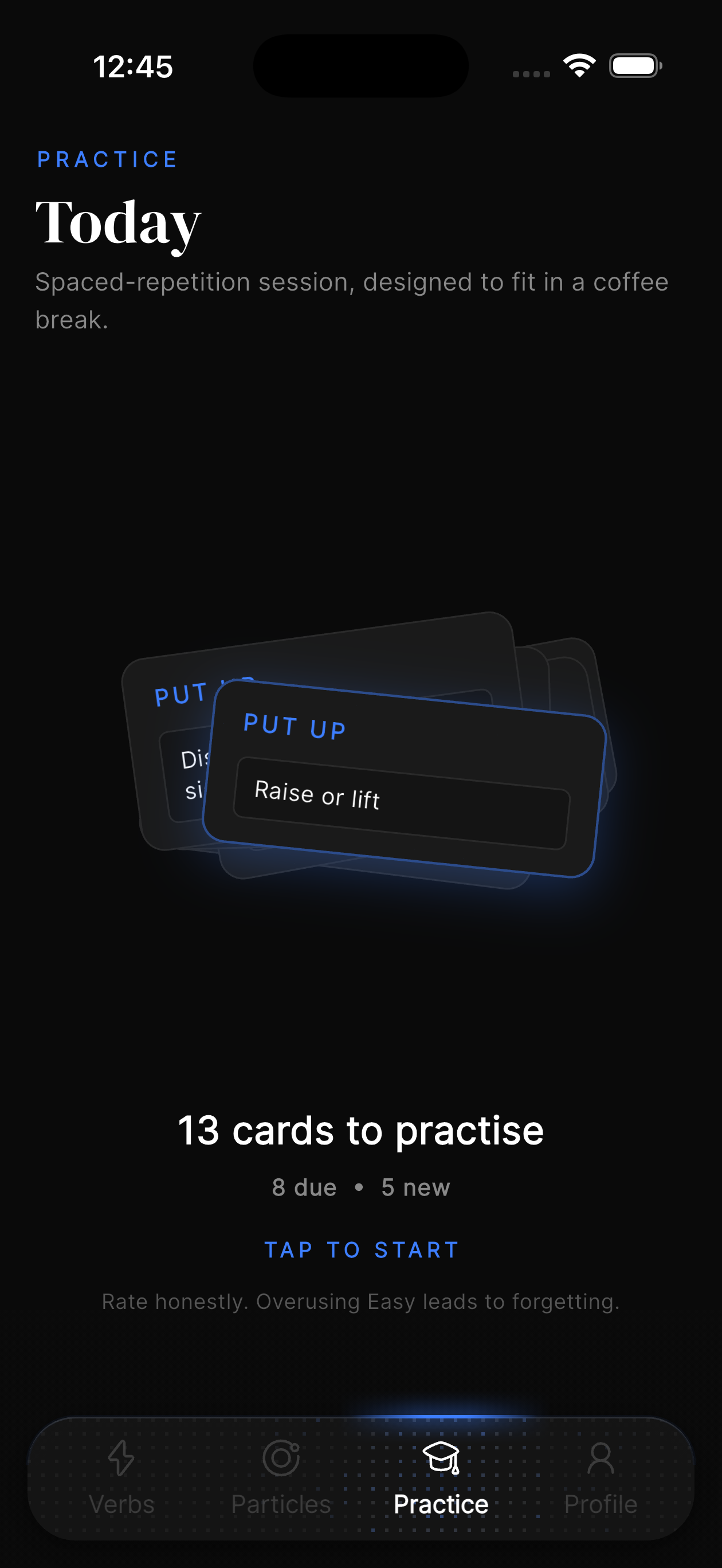
Practice “plan out” in Sink In
Drill “plan out” and 1,300+ other phrasal verbs with spaced repetition, organised by the particle patterns that connect them.
- Learn the pattern behind dozens of verbs at once — not one-off translations.
- Spaced repetition (SM-2) brings each meaning back right before you forget.
- Four practice modes train recall and discrimination, not just recognition.