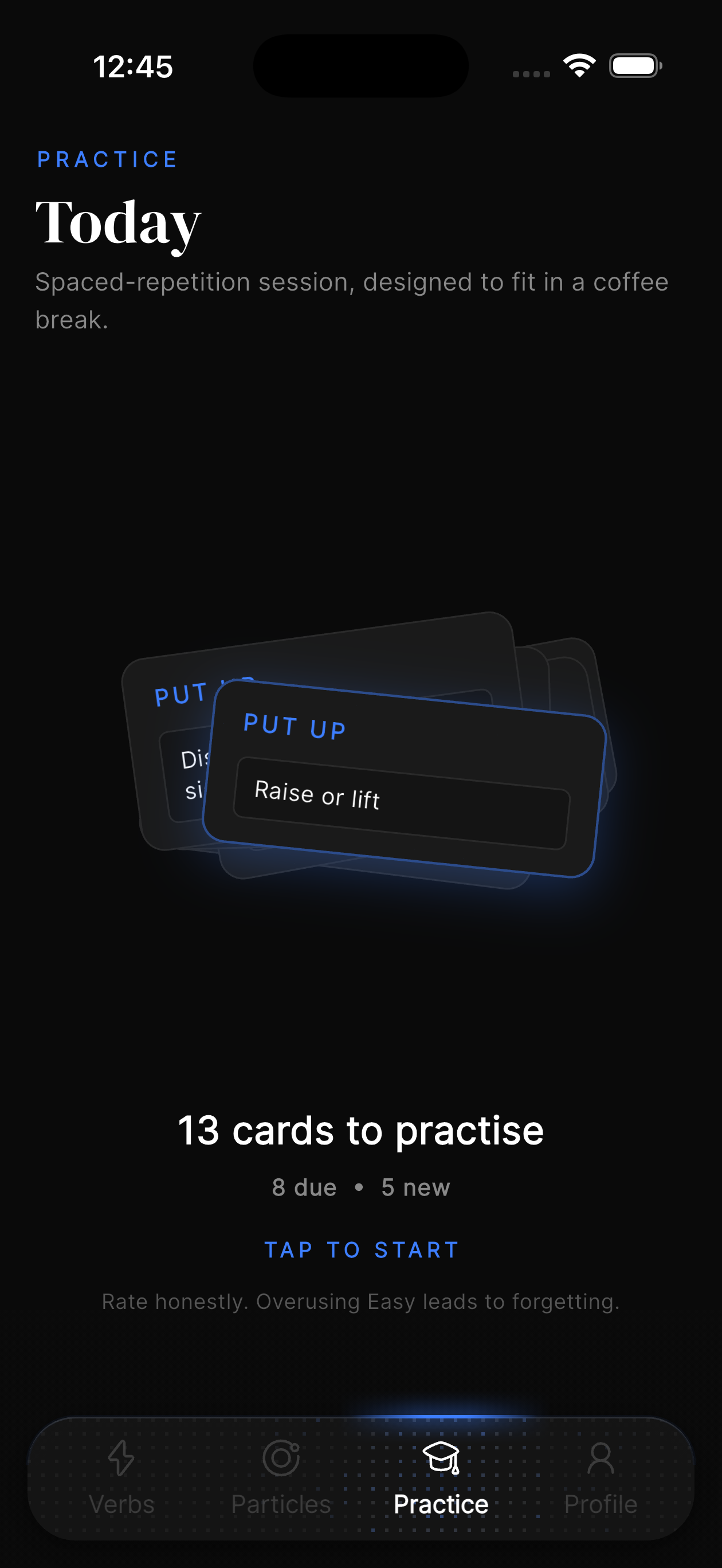
move up
phrasal verb·1 sense·particle up
Meanings
Shift to a higher position or rank
Why “up”? More of something is higher. Quantity, intensity and speed all rise.
“She moved up to manager last year.”
“The team moved up to second place.”
Don't confuse with
Move up means go to a higher place or rank. Move out means leave the home where you live.
Test yourself
“She moved up to manager last year.” What does it mean?
Nearby in the meaning map
Sink In connects verbs by particle pattern, contrast pairs, and shared base verbs.
move out
A contrast learners often mix up
Leave a residence
back up
Same up pattern: increase
Make a digital copy of data as a safeguard; Support someone's claim, story or position; Move backward along the same path; (of traffic or water) accumulate because flow is blocked
beef up
Same up pattern: increase
Strengthen or reinforce
blow up
Same up pattern: increase
Explode or be destroyed by an explosion; Inflate something by filling it with air; Suddenly become very angry; Enlarge a photograph or image; (of a storm or argument) develop quickly into something serious
build up
Same up pattern: increase
Gradually increase in amount, strength or intensity; Develop or strengthen something over time; Make someone or something seem more important or impressive than they are; Encourage or strengthen someone emotionally; Create momentum towards a moment or event
cheer up
Same up pattern: increase
Become happier or less miserable; Make someone else happier; (imperative) Stop being sad; used as encouragement
get up
Same up pattern: increase
Move from lying or sitting to an upright or standing position; Increase in strength
go up
Same up pattern: increase
Rise in price or amount
Sink In — iOS & Android
Practice “move up” in Sink In
Drill “move up” and 1,300+ other phrasal verbs with spaced repetition, organised by the particle patterns that connect them.
- Learn the pattern behind dozens of verbs at once — not one-off translations.
- Spaced repetition (SM-2) brings each meaning back right before you forget.
- Four practice modes train recall and discrimination, not just recognition.