leave off
phrasal verb·1 sense·particle off
Meanings
Stop doing something temporarily
Why “off”? Something is delayed, interrupted, reduced, or brought to an end.
“Where did we leave off yesterday?”
“We left off at the bridge scene.”
Don't confuse with
Leave off means stop doing something temporarily. Leave out means omit or exclude.
Test yourself
“Where did we leave off yesterday?” What does it mean?
Nearby in the meaning map
Sink In connects verbs by particle pattern, contrast pairs, and shared base verbs.
leave out
A contrast learners often mix up
Omit or exclude
back off
Same off pattern: stopping
Move away from someone or something, often in retreat; Stop pressuring or interfering with someone; Withdraw from a previous position or commitment
blow off
Same off pattern: stopping
Be removed by force, especially wind; Cancel plans or fail to meet someone deliberately; Release strong feelings, especially anger; Remove dust or particles by blowing air on them
break off
Same off pattern: stopping
Suddenly end a relationship, discussion, activity, or official contact; Detach a piece from something larger by breaking; Take a short pause from an activity
buy off
Same off pattern: stopping
Bribe someone to stop opposing you
call off
Same off pattern: stopping
Cancel a planned event
check off
Same off pattern: stopping
Mark items on a list as done or counted
clear off
Same off pattern: stopping
Leave a place quickly, often when told to; Remove items from a surface; Pay a debt completely

Sink In — iOS & Android
Practice “leave off” in Sink In
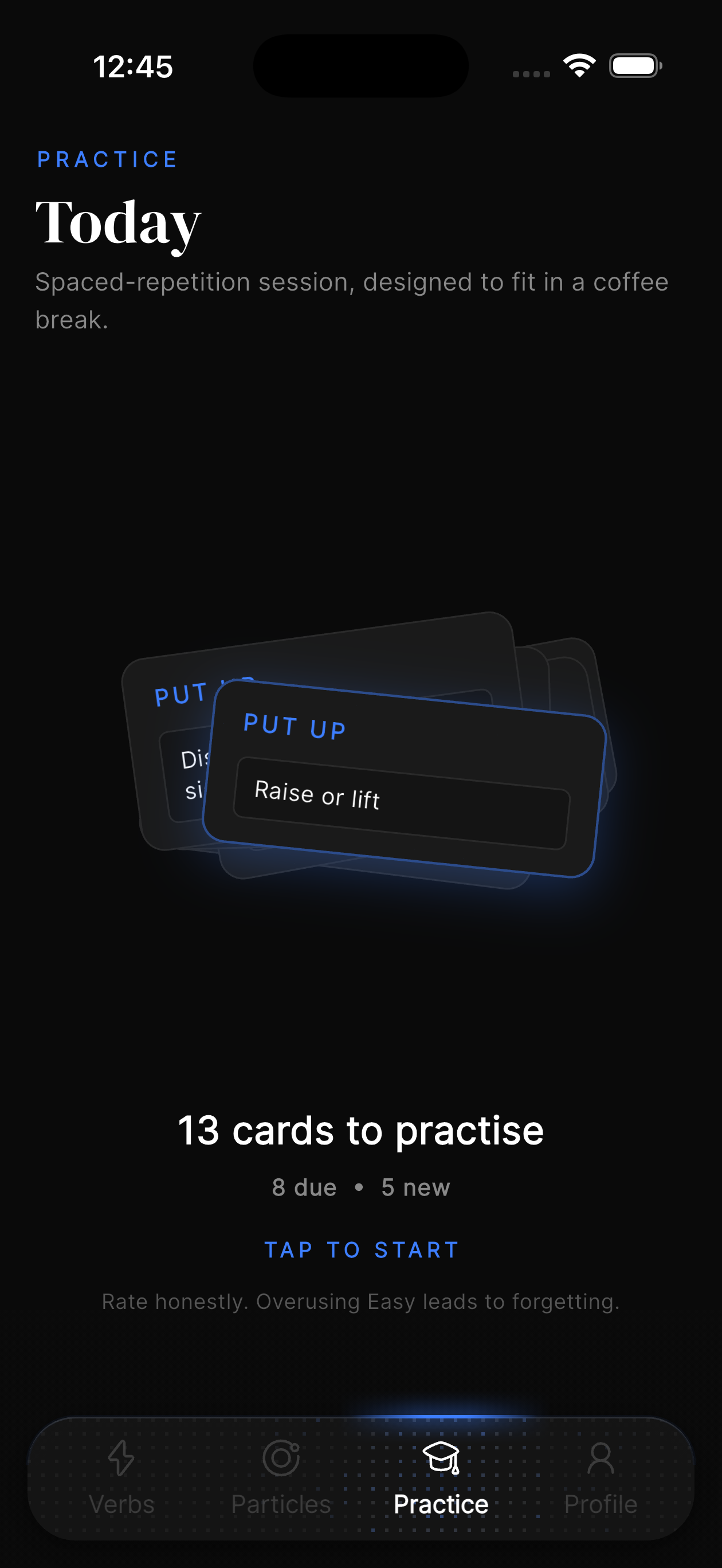
Drill “leave off” and 1,300+ other phrasal verbs with spaced repetition, organised by the particle patterns that connect them.
- Learn the pattern behind dozens of verbs at once — not one-off translations.
- Spaced repetition (SM-2) brings each meaning back right before you forget.
- Four practice modes train recall and discrimination, not just recognition.