crack on
phrasal verb·1 sense·particle on
Meanings
Continue working hard, often after a break
Why “on”? An action, event, state, or path continues or moves to a later point.
“Let's crack on with the report.”
“After tea, we cracked on with the packing.”
Don't confuse with
Crack on means continue working hard, often after a break. Crack down means take strict action against bad behaviour.
Test yourself
“Let's crack on with the report.” What does it mean?
Nearby in the meaning map
Sink In connects verbs by particle pattern, contrast pairs, and shared base verbs.
crack down
A contrast learners often mix up
Take strict action against bad behaviour
bring on
Same on pattern: continuation
Cause something, especially an illness or feeling, to start; Help someone or something develop or improve
carry on
Same on pattern: continuation
Continue doing something; Behave in a silly, loud or annoying way; Have a romantic affair, often secretly
catch on
Same on pattern: continuation
Become popular or fashionable; Begin to understand something
come on
Same on pattern: continuation
Used to encourage, hurry or challenge someone; Begin to develop, especially an illness or weather; Start working or be turned on; Make progress or improve; Show romantic or sexual interest in someone, often in a direct way; Be broadcast on television or radio
drag on
Same on pattern: continuation
Continue for too long in a tedious way
drone on
Same on pattern: continuation
Talk for a long time in a boring, monotonous voice
get on
Same on pattern: continuation
Board a bus, train or plane; Have a good relationship; Make progress with a task; Manage to dress yourself in; Be growing old; Continue with a task without delay
Sink In — iOS & Android
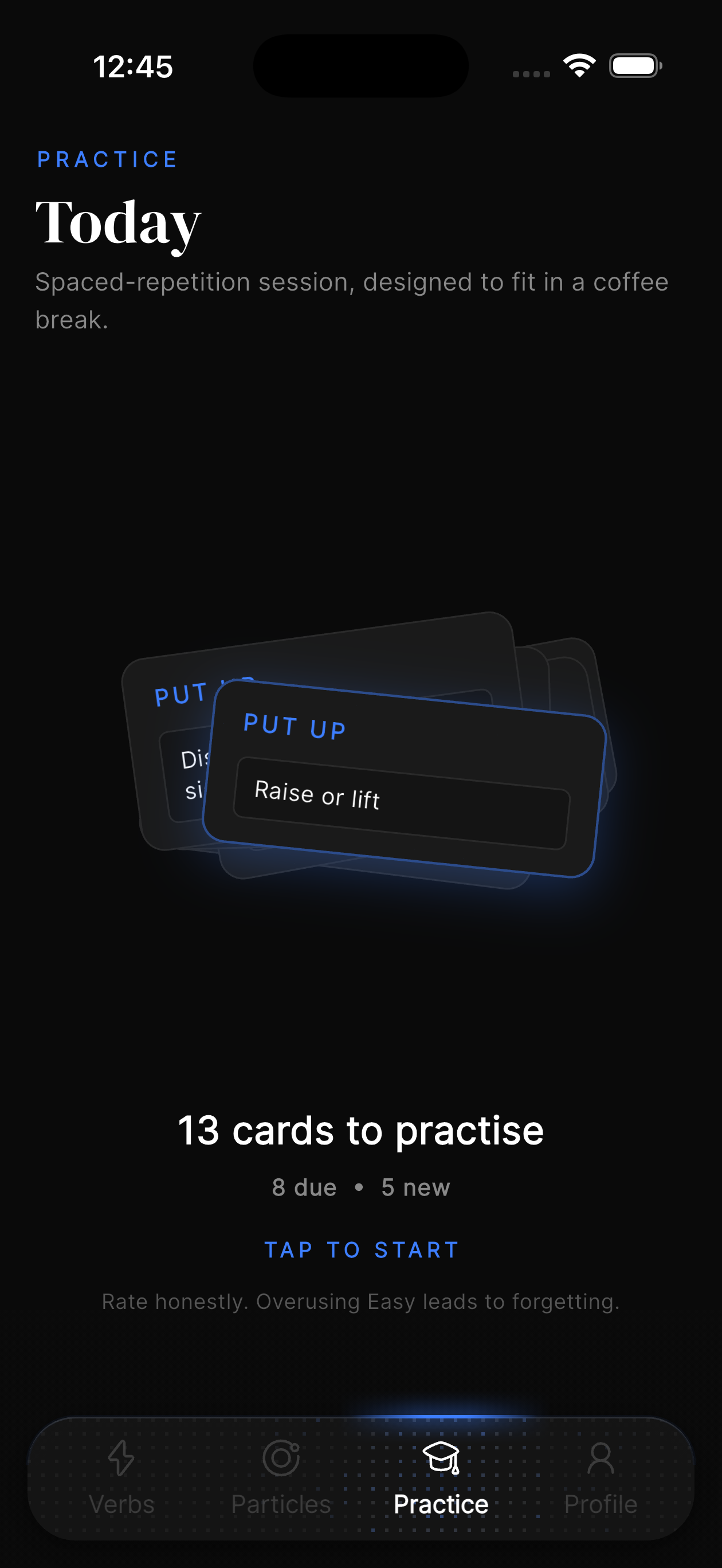
Practice “crack on” in Sink In
Drill “crack on” and 1,300+ other phrasal verbs with spaced repetition, organised by the particle patterns that connect them.
- Learn the pattern behind dozens of verbs at once — not one-off translations.
- Spaced repetition (SM-2) brings each meaning back right before you forget.
- Four practice modes train recall and discrimination, not just recognition.