Commonly confused
Wind up vs Wind down
“Wind up” and “Wind down” look alike but pull in different directions. Here is the quick way to tell them apart — with examples, the mistake to avoid, and a check.
Which one do you mean?
Up means finish or end up somewhere (or tease); down means relax. You wind up a meeting; you wind down after work.
Wind up
Bring something to an end, end up somewhere, or tease someone.
Wind down
Relax and unwind, or gradually reduce activity.
wind up
- 1
Conclude or settle a matter
Correct use
“They wound up the company last year.”
They closed down the company last year, finalising its affairs.
wind down
- 1
Relax after activity
Correct use
“Leo wound down with quiet music after the evening chores.”
Leo relaxed with quiet music after the evening tasks.
Common mistake
I like to wind up after a long day.
I like to wind down after a long day.
To relax, use wind down.
Test yourself
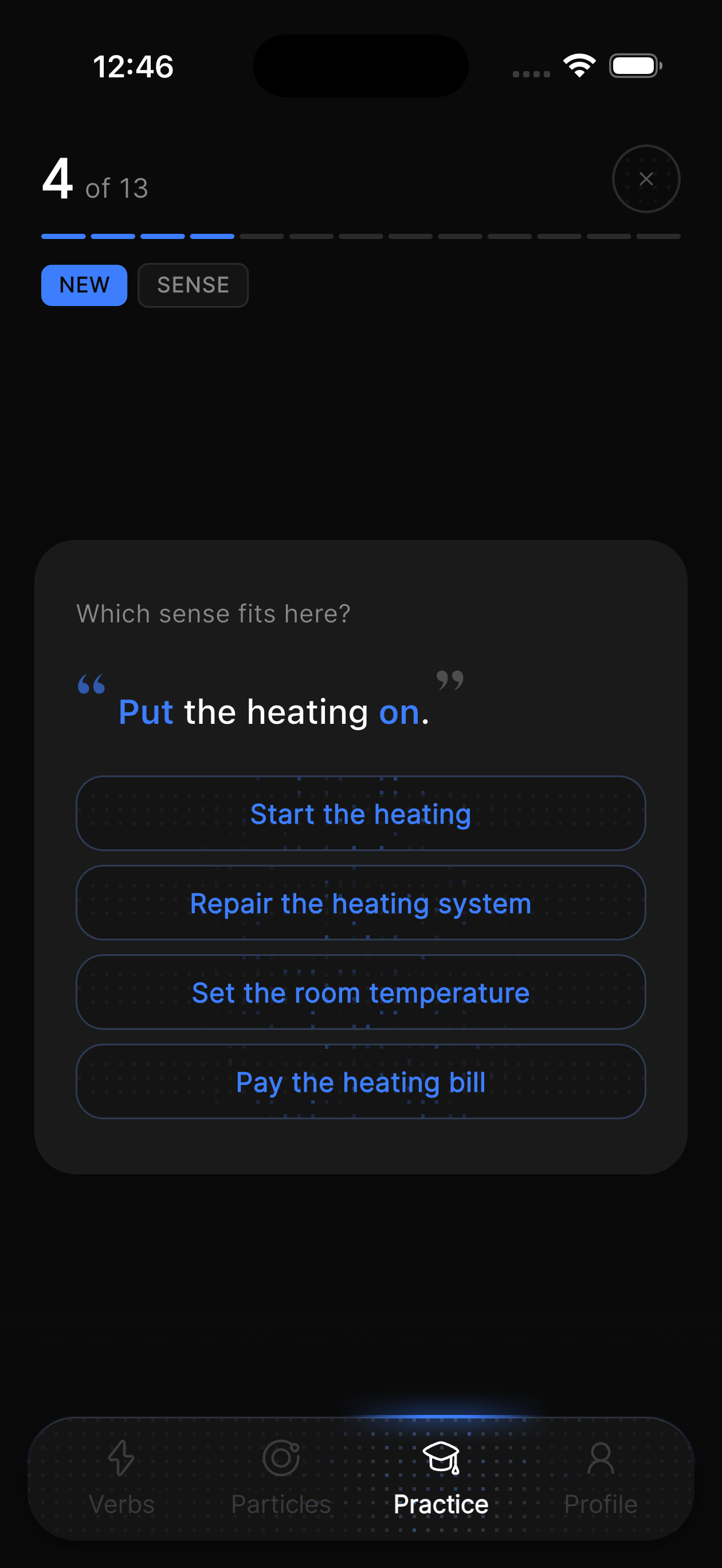
“They wound up the company last year.” What does it mean?
Sink In — iOS & Android
Stop mixing them up
Sink In turns confusable pairs like this into quick contrast drills, so the right particle becomes automatic instead of a guess.
- Learn the pattern behind dozens of verbs at once — not one-off translations.
- Spaced repetition (SM-2) brings each meaning back right before you forget.
- Four practice modes train recall and discrimination, not just recognition.