turn off
phrasal verb·2 senses·particle off
Meanings
Stop a device, light, or machine from operating
Why “off”? An active connection, session, machine, light, or device stops.
“Maya turned off her morning alarm while she was still in bed.”
“Turn off the oven before leaving.”
Make someone lose interest or feel dislike
Why “off”? Something unwanted is prevented from reaching or affecting you.
“The dirty kitchen turned me off the food.”
“Pushy adverts often turn customers off.”
Memory hook
Off — the power stops flowing.
Common mistake
Turn off it.
Turn it off.
A pronoun goes between the verb and the particle: turn it off.
Natural collocations
The word partners “turn off” most often appears with — learn the phrase, not just the verb.
Don't confuse with
Test yourself
“Maya turned off her morning alarm while she was still in bed.” What does it mean?
Nearby in the meaning map
Sink In connects verbs by particle pattern, contrast pairs, and shared base verbs.
turn down
A contrast learners often mix up
Reject or refuse an offer or request; Lower the volume, heat or intensity of a device; Fold or pull bedding so it is ready to sleep in
turn on
A contrast learners often mix up
Make a device, light, or machine start working
brush off
Same off pattern: defence
Dismiss something or someone as unimportant; Remove dust or dirt by sweeping it lightly; Refuse to talk to someone politely
click off
Same off pattern: power stop
Deactivate by clicking
drive off
Same off pattern: defence
Leave by car; Force back by attacking
fend off
Same off pattern: defence
Keep someone or something at a distance
fight off
Same off pattern: defence
Repel an attacker or illness
flip off
Same off pattern: power stop
Deactivate by flipping a control
Tell it apart
Side-by-side comparisons with the verbs learners most often confuse for “turn off”.

Sink In — iOS & Android
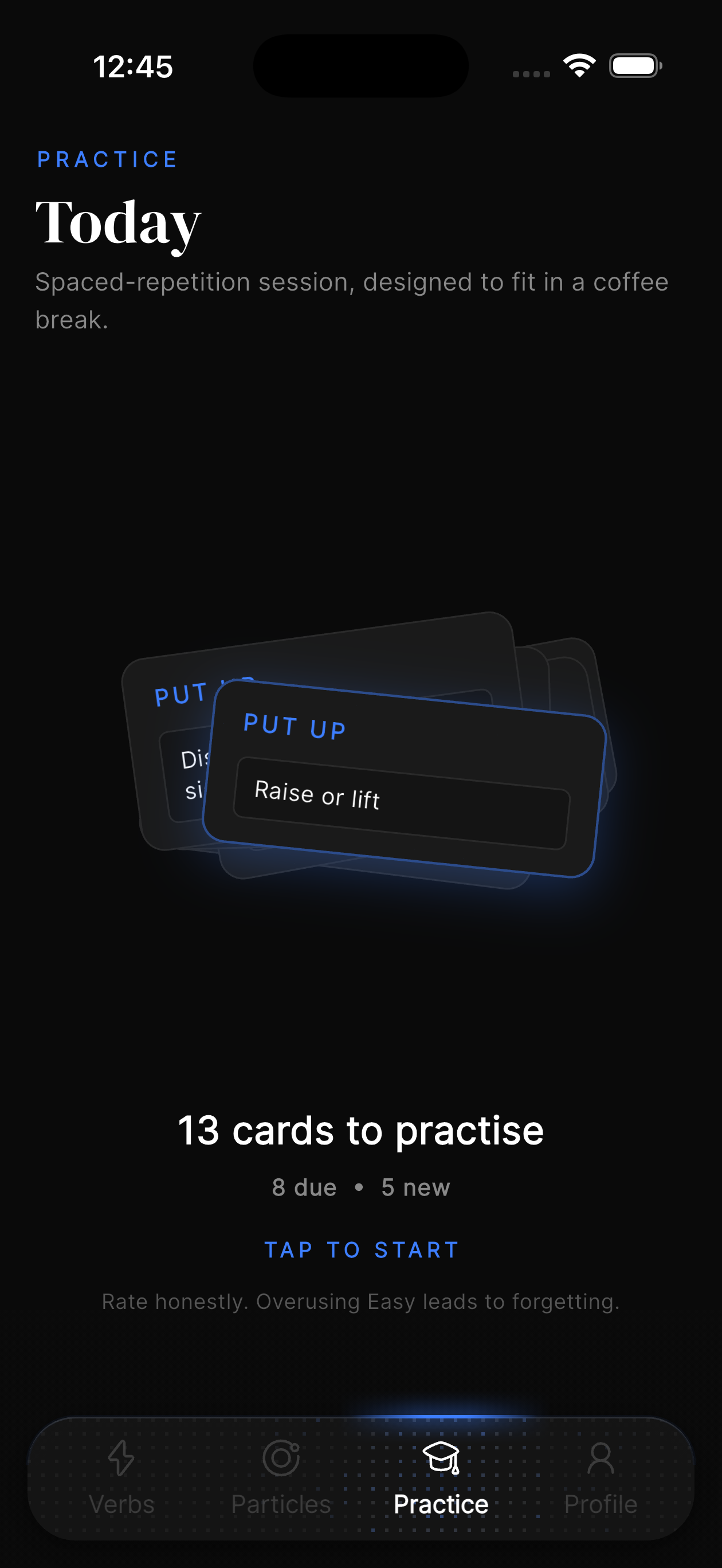
Practice “turn off” in Sink In
Drill “turn off” and 1,300+ other phrasal verbs with spaced repetition, organised by the particle patterns that connect them.
- Learn the pattern behind dozens of verbs at once — not one-off translations.
- Spaced repetition (SM-2) brings each meaning back right before you forget.
- Four practice modes train recall and discrimination, not just recognition.