push in
phrasal verb·1 sense·particle in
Meanings
Move into a queue ahead of others without permission
Why “in”? A person, vehicle, message, or result reaches a place or becomes present there.
“He pushed in at the front.”
“Leo stopped a man trying to push in ahead of Maya at the club.”
Don't confuse with
Push in means move into a queue ahead of others without permission. Push out means force someone to leave a position or place.
Test yourself
“He pushed in at the front.” What does it mean?
Nearby in the meaning map
Sink In connects verbs by particle pattern, contrast pairs, and shared base verbs.
push out
A contrast learners often mix up
Force someone to leave a position or place
ask in
Same in pattern: arrival
Invite someone to enter your home
barge in
Same in pattern: arrival
Enter a place rudely without permission
break in
Same in pattern: arrival
Enter a building illegally by force; Interrupt a conversation and begin speaking
bring in
Same in pattern: arrival
Introduce someone or something into a discussion or organisation; Earn money for a person or business; Introduce a new law, system or rule; Deliver a verdict in a court
burst in
Same in pattern: arrival
Enter a place suddenly and forcefully
call in
Same in pattern: arrival
Visit a place briefly, often on the way somewhere; Phone a workplace or radio station; Ask experts or professionals to come and help; Demand the return of money lent
cash in
Same in pattern: arrival
Take advantage of a situation for profit

Sink In — iOS & Android
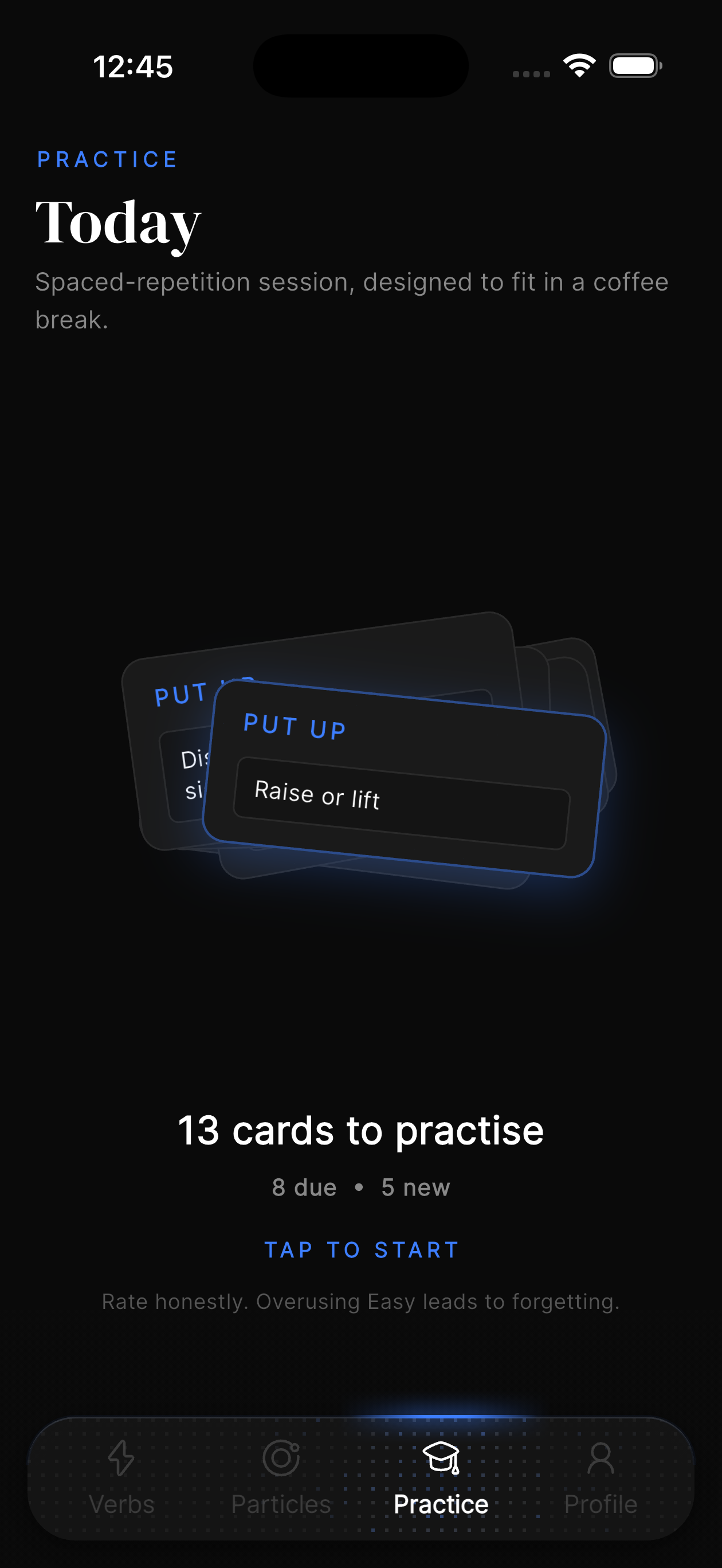
Practice “push in” in Sink In
Drill “push in” and 1,300+ other phrasal verbs with spaced repetition, organised by the particle patterns that connect them.
- Learn the pattern behind dozens of verbs at once — not one-off translations.
- Spaced repetition (SM-2) brings each meaning back right before you forget.
- Four practice modes train recall and discrimination, not just recognition.