Commonly confused
Move in vs Move on
“Move in” and “Move on” look alike but pull in different directions. Here is the quick way to tell them apart — with examples, the mistake to avoid, and a check.
Which one do you mean?
In means start living somewhere; on means leave the past behind and progress.
Move in
Start living in a new home.
Move on
Leave a topic, place, or relationship and progress.
move in
- 1
Start living in a new home
- 2
Approach in order to take action or attack
- 3
Start sharing a home with a romantic partner
Correct use
“They moved in last week.”
They started living here last week.
move on
- 1
Continue your life after a difficult event
- 2
Change to a new topic, place or job
- 3
(of police) order people to leave a place
Correct use
“It's time to move on.”
It is time to accept what happened and continue living.
Common mistake
After the breakup, she needs to move in.
After the breakup, she needs to move on.
To leave the past behind, use move on.
Test yourself
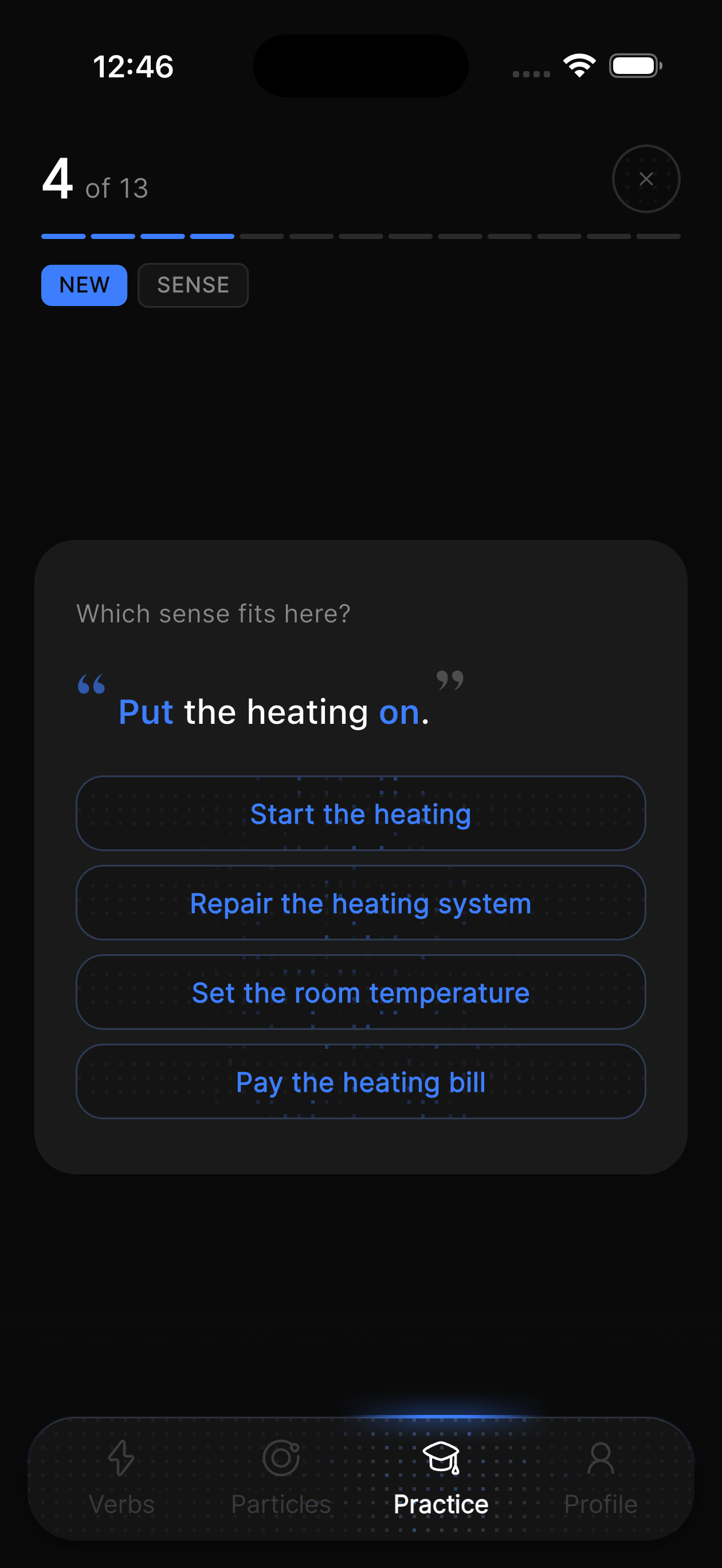
“They moved in last week.” What does it mean?

Sink In — iOS & Android
Stop mixing them up
Sink In turns confusable pairs like this into quick contrast drills, so the right particle becomes automatic instead of a guess.
- Learn the pattern behind dozens of verbs at once — not one-off translations.
- Spaced repetition (SM-2) brings each meaning back right before you forget.
- Four practice modes train recall and discrimination, not just recognition.