go on
phrasal verb·5 senses·particle on
Meanings
Continue happening or doing something
Why “on”? An action, event, state, or path continues or moves to a later point.
“Please go on with the story.”
“She paused for a drink, then went on with her explanation.”
“The meeting went on for hours.”
Happen or take place
“What's going on here?”
“No one knew what was going on in the empty house.”
Talk for a long time, often in a tedious way
“He goes on about his car.”
“Once he starts, he can go on about football for hours.”
Use information as the basis for an opinion
Why “on”? One thing supports another. A plan may need people, facts, money, or past success.
“There's not much to go on.”
“We only had one short message to go on.”
Begin to operate
Why “on”? A device starts working, a session or event begins, or a condition starts to develop.
“The lights went on at dusk.”
“Why did the fan go on by itself?”
Don't confuse with
Go on means continue happening or doing something. Go in means enter a place.
Go on means continue happening or doing something. Go forward means continue with a plan or proposal.
Go on means continue happening or doing something. Go ahead means begin or continue with a planned action.
Test yourself
“Please go on with the story.” What does it mean?
Nearby in the meaning map
Sink In connects verbs by particle pattern, contrast pairs, and shared base verbs.
go ahead
A contrast learners often mix up
Begin or continue with a planned action
go forward
A contrast learners often mix up
Continue with a plan or proposal
go in
A contrast learners often mix up
Enter a place; (of the sun, moon or stars) become hidden behind clouds; Be understood or accepted into the mind
go off
A contrast learners often mix up
Stop working or be cut; Start making a loud warning sound; Become unsafe or unpleasant to eat or drink
act on
Same on pattern: support
Take action because of advice or information
base on
Same on pattern: support
Use something as the foundation or starting point
bring on
Same on pattern: starting
Cause something, especially an illness or feeling, to start; Help someone or something develop or improve
build on
Same on pattern: support
Use a previous success as a foundation for more
Tell it apart
Side-by-side comparisons with the verbs learners most often confuse for “go on”.

Sink In — iOS & Android
Practice “go on” in Sink In
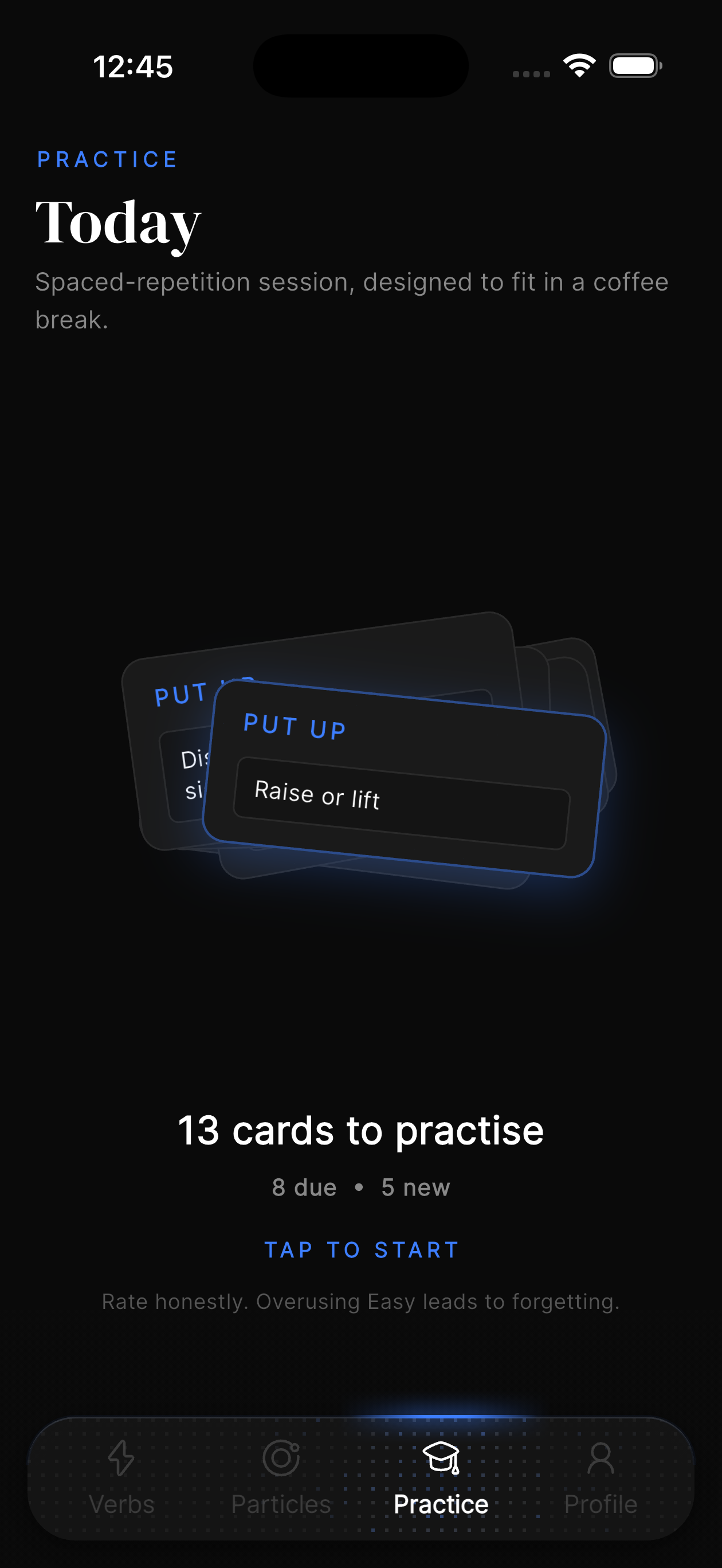
Drill “go on” and 1,300+ other phrasal verbs with spaced repetition, organised by the particle patterns that connect them.
- Learn the pattern behind dozens of verbs at once — not one-off translations.
- Spaced repetition (SM-2) brings each meaning back right before you forget.
- Four practice modes train recall and discrimination, not just recognition.