fall behind
phrasal verb·2 senses·particle behind
Meanings
Fail to keep pace or make progress as quickly as others
Why “behind”? One person or thing follows behind another on the same path.
“He fell behind in his studies.”
“The runner fell behind the main group.”
“One boat fell behind the fleet in rough water.”
“Maya warned that the project would fall behind if the delivery arrived late.”
Of a payment, become late or owed
“Her rent payments fell two weeks behind.”
“Several loan payments fell behind schedule.”
Don't confuse with
Fall behind means fail to keep pace or progress as quickly as others. Fall under means drop below an expected standard or value.
Test yourself
“He fell behind in his studies.” What does it mean?
Nearby in the meaning map
Sink In connects verbs by particle pattern, contrast pairs, and shared base verbs.
fall under
A contrast learners often mix up
Drop below an expected standard or value; Belong to a particular category
be behind
Same behind pattern: late
Be late with work or a schedule; Be the hidden cause or organiser of something; Support a person, plan, or cause
drop behind
Same behind pattern: late
Lose your position relative to a group moving ahead
get behind
Same behind pattern: late
Become late with work, payments, or schedule; Support a person, idea, or cause
lag behind
Same behind pattern: late
Move or progress more slowly than others
leave behind
Same behind pattern: late
Forget or fail to take something with you when you go; Surpass someone in development or achievement; Depart from someone, ending a relationship or association
run behind
Same behind pattern: late
Be later than scheduled
set behind
Same behind pattern: late
Cause something or someone to be slower than expected
Sink In — iOS & Android
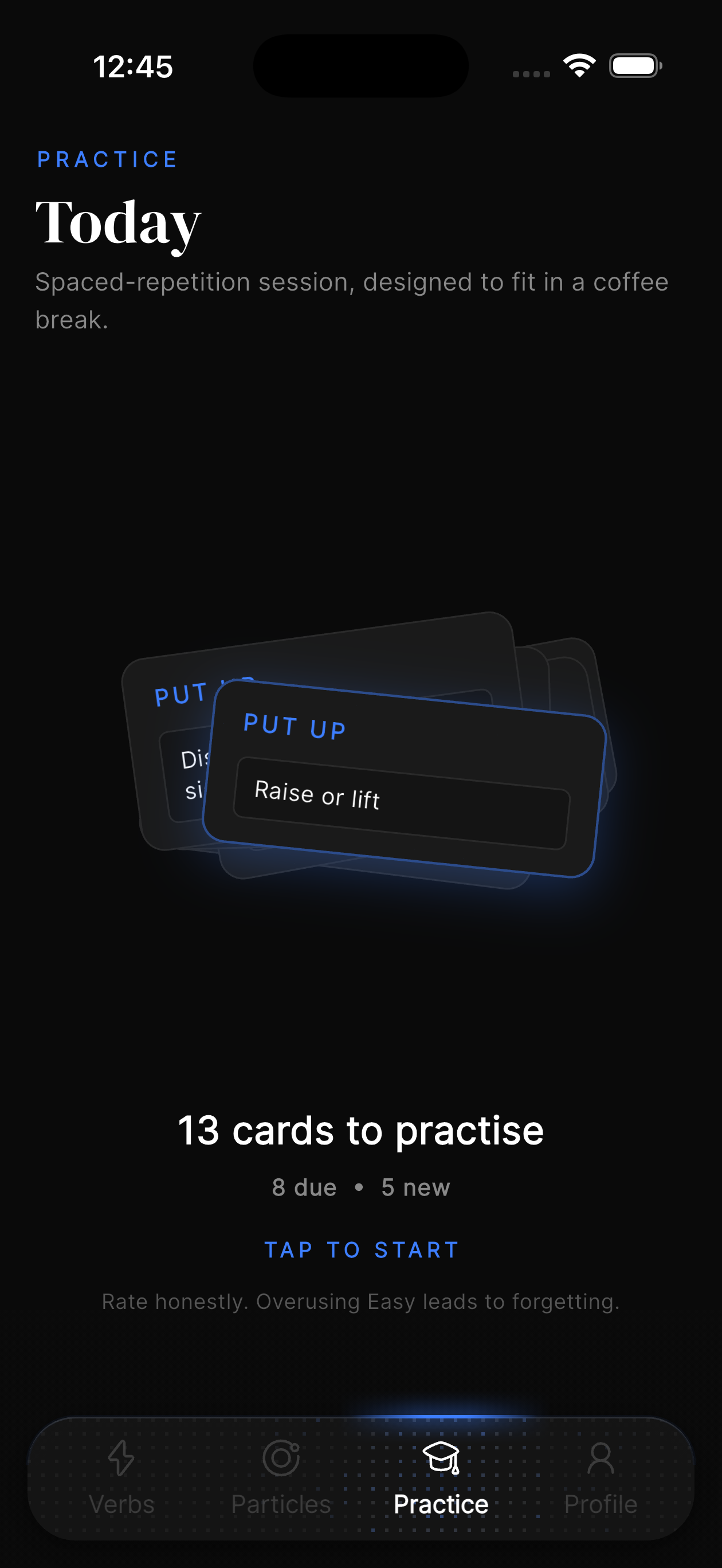
Practice “fall behind” in Sink In
Drill “fall behind” and 1,300+ other phrasal verbs with spaced repetition, organised by the particle patterns that connect them.
- Learn the pattern behind dozens of verbs at once — not one-off translations.
- Spaced repetition (SM-2) brings each meaning back right before you forget.
- Four practice modes train recall and discrimination, not just recognition.