come after
phrasal verb·2 senses·particle after
Meanings
Be later than something in time or order
Why “after”? One thing appears later than another in a list, story, line, or time.
“Lunch comes after the morning lesson.”
“The letter N comes after M in the alphabet.”
Chase someone, or try to punish them
Why “after”? A person follows a moving target and tries to reach or obtain it.
“The dog came after us when we opened the gate.”
“The bank came after him for the unpaid loan.”
Don't confuse with
Come after means be later in time or order. Come along means arrive or appear, often by chance.
Test yourself
“Lunch comes after the morning lesson.” What does it mean?
Nearby in the meaning map
Sink In connects verbs by particle pattern, contrast pairs, and shared base verbs.
come along
A contrast learners often mix up
Make progress or develop; Accompany someone to a place; Arrive or appear, often by chance
be after
Same after pattern: chasing
Be trying to find or get something
chase after
Same after pattern: chasing
Pursue someone or something quickly
follow after
Same after pattern: order
Come later than someone or something in order
go after
Same after pattern: chasing
Pursue someone or something with effort
run after
Same after pattern: chasing
Chase someone by running
come about
Same base verb: come
Happen, especially in an unplanned way; Of a ship, change tack to the opposite side
come across
Same base verb: come
Find or meet someone or something by chance; Give a particular impression to others; Be expressed clearly enough for people to notice or understand

Sink In — iOS & Android
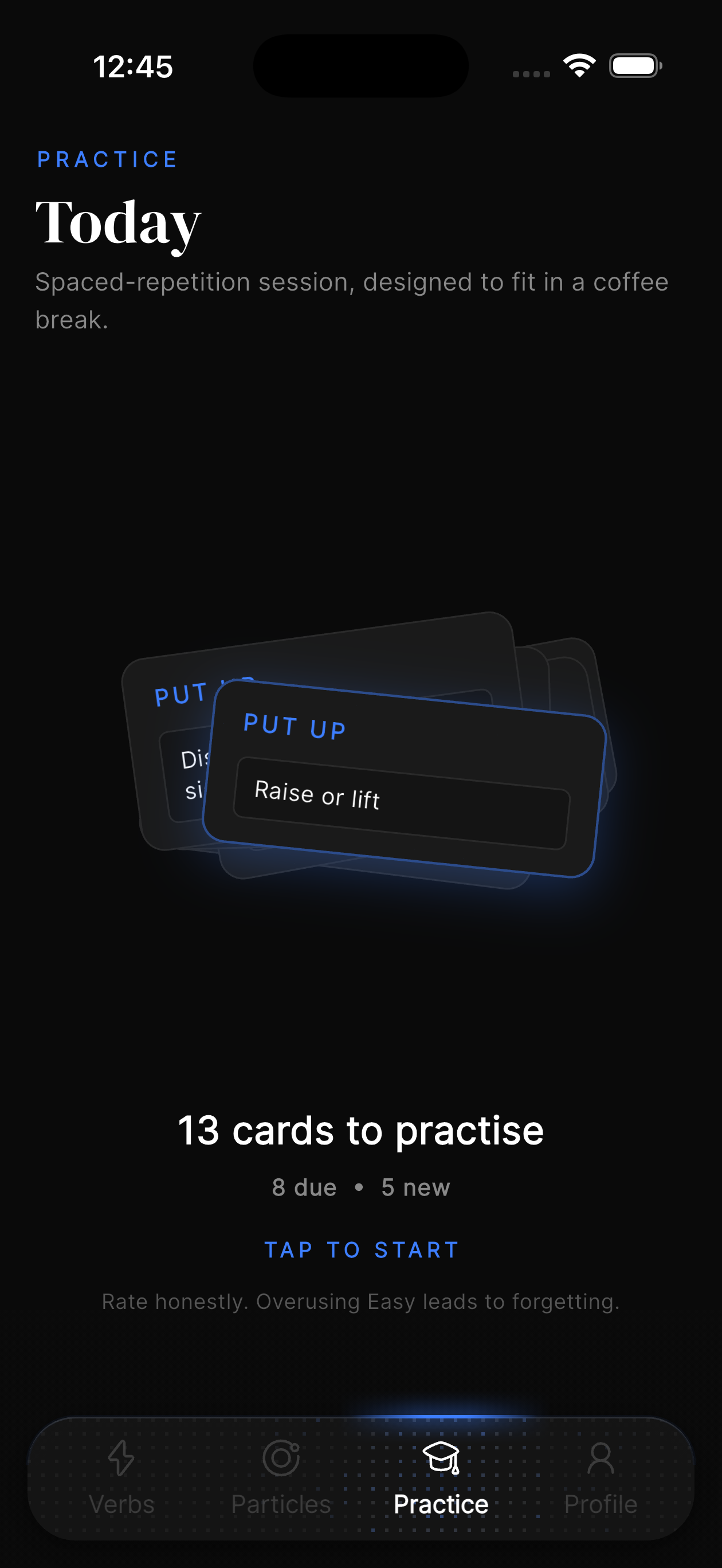
Practice “come after” in Sink In
Drill “come after” and 1,300+ other phrasal verbs with spaced repetition, organised by the particle patterns that connect them.
- Learn the pattern behind dozens of verbs at once — not one-off translations.
- Spaced repetition (SM-2) brings each meaning back right before you forget.
- Four practice modes train recall and discrimination, not just recognition.